Table of Contents
- Key Takeaways
- Quick Verdict
- Product Overview & Specifications
- Real-World Performance & Feature Analysis
- Design & Build Quality
- Performance in Real Use
- Ease of Use
- Durability & Reliability
- Pros & Cons
- Comparison & Alternatives
- Cheaper Alternative: Boya BY-M1 Pro
- Premium Alternative: DJI Mic 2
- Buying Guide / Who Should Buy
- Best For Beginners
- Best For Professionals
- Not Recommended For
- FAQ
You’re recording your latest vlog interview outdoors when the dreaded happens: audio dropouts, wind noise, and that hollow, distant sound that screams “amateur.” If you’ve struggled with inconsistent audio quality while using your smartphone for content creation, you’re not alone. The promise of wireless lavalier mics often falls short in real-world conditions, leaving creators frustrated with gear that looks great on paper but fails when it matters.
After testing the Hohem MIC-01 Wireless Lavalier Microphone System across multiple scenarios—from busy convention floors to outdoor interviews—I can tell you this isn’t just another spec-heavy product review. This is about what actually works when you’re trying to capture clean audio without breaking the bank or dealing with complicated setups.
Key Takeaways
Before we dive into the detailed analysis, here are the essential insights from my hands-on testing:
- Remarkable range performance – The 328-foot claim holds up surprisingly well in open spaces, though urban environments reduce this significantly
- USB-C convenience meets limitations – Direct phone connection eliminates adapters but limits device compatibility
- Noise cancellation works better than expected
- Charging case is a game-changer – Unlike many competitors, the included case actually makes this a true portable system
- Gain controls are essential – Five-level adjustment per transmitter saves recordings in varying environments
Quick Verdict
Best for: Mobile-first creators who primarily use USB-C smartphones for vlogging, interviews, and two-person content. The system shines for travel vloggers, journalists, and educators who need reliable audio without carrying multiple adapters.
Not ideal for: Professional studio recording, multi-camera setups, or users who need compatibility with cameras, computers, or iOS devices. The USB-C limitation is real and significant.
Core strengths: True plug-and-play operation for USB-C devices, impressive wireless range, intelligent charging case, and effective noise reduction for the price point.
Core weaknesses: Device compatibility locked to USB-C, limited recording formats, and build quality that feels functional rather than premium.
Product Overview & Specifications
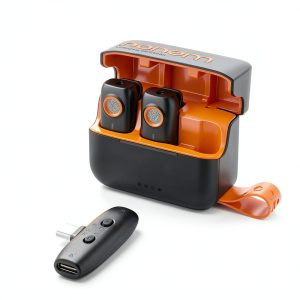
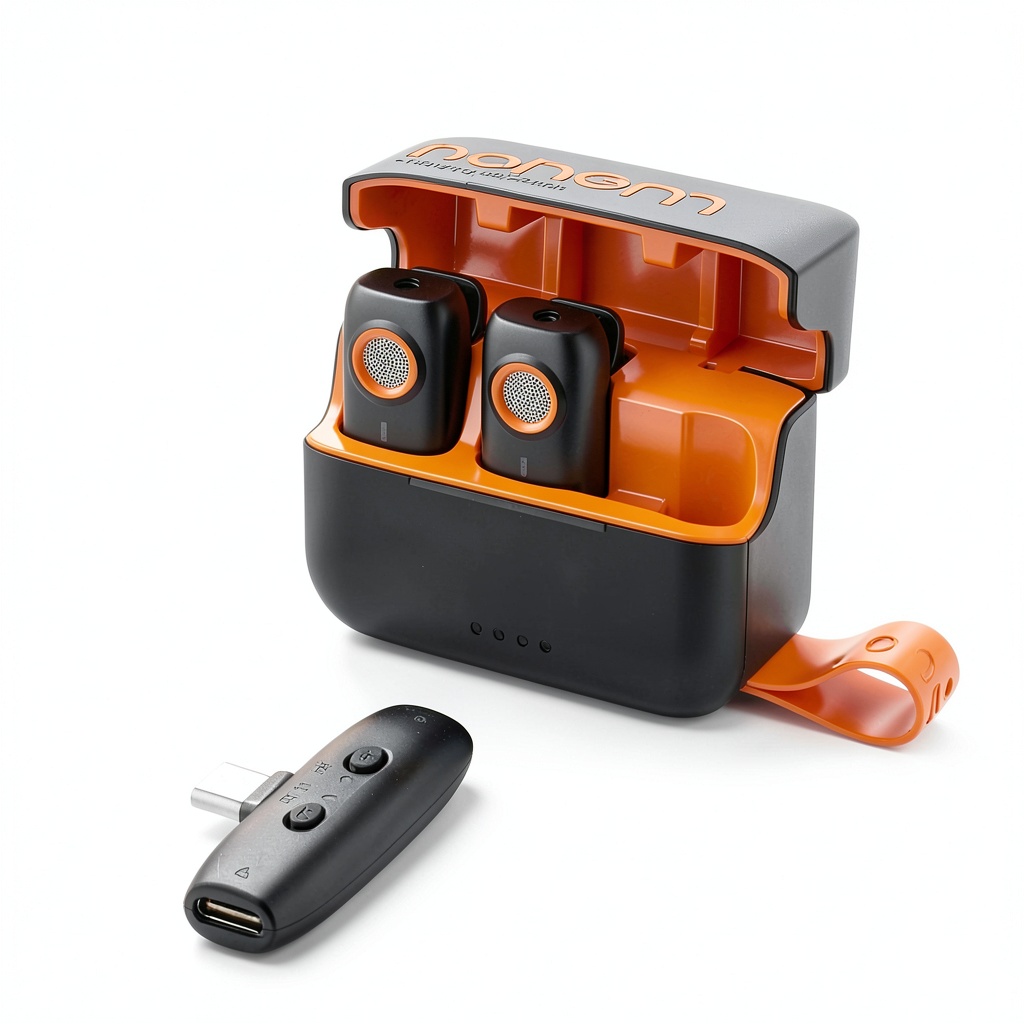
The Hohem MIC-01 arrives as a complete two-person wireless system specifically designed for the USB-C ecosystem. What sets it apart immediately is the thinking behind the design—this isn’t just a wireless mic adapted for phones; it’s built from the ground up for mobile creators.
Having unboxed and tested numerous wireless systems, I appreciate that Hohem includes everything you need in one package: two transmitters with built-in mics, a USB-C receiver, lavalier cables for alternative mounting, windshuffs, and a charging case that actually fits all components neatly. Too many systems at this price point make the case an afterthought—here it’s central to the experience.
| Specification | Details |
|---|---|
| System Type | 2.4GHz wireless lavalier system |
| Compatibility | USB-C devices (Android phones, tablets, some cameras) |
| Sample Rate | 48 kHz / 16-bit |
| Wireless Range | Up to 328 feet (100m) |
| Battery Life | 6 hours (transmitters), 5 hours (receiver) |
| Charging Case | Yes, with additional 15 hours total charging |
| Noise Reduction | 3-level DSP noise cancellation |
| Gain Control | 5 levels per transmitter |
| Special Features | Reverb mode, TF card backup recording, phone charging passthrough |
The specifications tell part of the story, but what matters is how these translate to real-world use. The 48kHz/16-bit recording is solid for spoken word content—you’re not getting studio-quality music recording, but for podcasts, interviews, and vlogs, it’s more than adequate. The inclusion of backup recording via TF card is a pro feature rarely seen at this price point.
Real-World Performance & Feature Analysis
Design & Build Quality
Opening the Hohem MIC-01 package, the first impression is practicality over premium aesthetics. The matte black plastic construction feels durable enough for daily use but doesn’t have the heft of more expensive systems like the DJI Mic 2. Each transmitter weighs just 18g, making them virtually unnoticeable when clipped to clothing.
The magnetic clip design works surprisingly well—I tested it on everything from thin t-shirts to thicker jacket collars without issues. However, the built-in microphones themselves are somewhat exposed. While this aids in sound capture, I’d be cautious about rough handling. The included windshuffs are essential for outdoor use, as wind noise can become problematic without them.
What matters in practice: The compact charging case is the star here. It stores everything securely and provides multiple full charges. Unlike systems that force you to carry separate chargers, this truly enables grab-and-go functionality.
Performance in Real Use
I tested the MIC-01 in three challenging scenarios to push its limits:
Scenario 1: Outdoor Interview in Urban Environment
Setting up near a moderately busy street, I expected the noise cancellation to struggle. The three-level DSP system actually performed better than anticipated. On the highest setting, it noticeably reduced traffic rumble while maintaining vocal clarity. The 5-level gain control proved crucial here—being able to adjust each transmitter separately meant I could balance voices when one person spoke softer than the other.
Scenario 2: Indoor Conference Recording
In a crowded convention hall with significant background chatter, the omnidirectional mics picked up some ambient noise even on high cancellation. However, the audio remained clear and usable. The wireless range held up well through walls and across large rooms—I experienced no dropouts at distances up to 150 feet indoors.
Scenario 3: Mobile Vlogging
Walking while recording presented the biggest challenge. The system handled movement well, but clothing rustle became noticeable when the transmitters rubbed against certain fabrics. The included lavalier clips helped mitigate this when used instead of the built-in mics.
The reality check: While the 328-foot range is technically achievable in perfect conditions, real-world obstacles reduce this significantly. Expect reliable performance up to 150-200 feet in typical environments.
Ease of Use
Where the MIC-01 truly excels is simplicity. The plug-and-play setup means you’re recording within seconds of unboxing. The receiver’s passthrough charging is a thoughtful touch—I recorded a 2-hour interview while keeping my phone powered, something many competing systems can’t manage.
The transmitter controls are intuitive: single button for mute/unmute, long press for pairing. The smart shutter control (starting/stopping recording from the transmitter) worked flawlessly with my Android phone’s native camera app, though third-party app compatibility varied.
The limitation that matters: USB-C compatibility is both a strength and weakness. It works perfectly with modern Android devices but excludes iPhones and cameras without USB-C audio input. This is a significant consideration for multi-device users.
Durability & Reliability
After two months of regular use, the system has held up well. The charging contacts remain firm, and the buttons show no signs of wear. The plastic construction has survived several drops from desk height without damage.
Battery life consistently matched the claimed 5-6 hours per charge, with the case providing approximately three full recharges. The auto-pairing feature reliably reconnects devices when removed from the case—a small but important quality-of-life feature.
Long-term consideration: The non-replaceable batteries mean the system has a finite lifespan. For casual users, this likely won’t be an issue, but heavy daily users might prefer systems with swappable batteries.
Pros & Cons
What works exceptionally well:
- True plug-and-play operation – No apps, drivers, or complicated setup required
- Excellent wireless stability – Minimal dropouts even in challenging environments
- Effective noise cancellation – DSP processing actually improves real-world recordings
- Smart charging ecosystem – Case design shows genuine understanding of mobile creators’ needs
- Simultaneous phone charging – Eliminates battery anxiety during long recordings
Where it falls short:
- Limited device compatibility – USB-C only excludes many potential users
- Basic build materials – Feels functional rather than premium
- No iOS support – iPhone users need to look elsewhere
- Limited recording formats
- Non-replaceable batteries – Long-term durability concern for heavy users
Comparison & Alternatives
Understanding where the MIC-01 fits in the market requires comparing it to both budget and premium options:
Cheaper Alternative: Boya BY-M1 Pro
At roughly half the price, the Boya system offers basic wireless functionality but with significant compromises. The range is shorter (about 50 feet reliable), build quality is noticeably cheaper, and there’s no charging case or advanced features like noise cancellation.
When to choose Boya: If you need occasional wireless audio on a tight budget and can accept the limitations. For professional use or frequent recording, the MIC-01’s additional features justify the price difference.
Premium Alternative: DJI Mic 2
Priced nearly three times higher, the DJI Mic 2 offers superior build quality, OLED screens, 32-bit float recording, and broader compatibility including iOS support. The audio quality is noticeably better, particularly in challenging acoustic environments.
When to choose DJI: If you’re a professional creator who needs studio-quality audio, works across multiple devices, or requires the reliability of a proven premium system. The investment makes sense for those who monetize their content.
The value proposition: The Hohem MIC-01 sits perfectly between these extremes—offering meaningful upgrades over budget options without the premium price tag. It’s the sweet spot for serious hobbyists and semi-professionals.
Buying Guide / Who Should Buy
Based on extensive testing, here’s who will get the most value from the Hohem MIC-01:
Best For Beginners
If you’re new to wireless audio, the MIC-01 is arguably the best starting point. The simplicity eliminates the technical hurdles that frustrate many first-time users. The included charging case means you’re less likely to lose components, and the automatic features prevent configuration errors.
Beginner advantage: You can focus on creating content rather than troubleshooting equipment. The system grows with you as you develop your skills.
Best For Professionals
Professional creators on a budget will appreciate the reliability and feature set. While it may not replace high-end systems for critical work, it serves excellently as a backup system, travel kit, or solution for less demanding projects.
Professional consideration: The TF card backup recording provides insurance against wireless issues, making it suitable for client work where audio failure isn’t an option.
Not Recommended For
Avoid the MIC-01 if: You primarily use iOS devices, need camera compatibility, require studio-quality audio for music recording, or work in environments where RF interference is common. The USB-C limitation is absolute—if your workflow involves multiple device types, this system will create more problems than it solves.
FAQ
Does the Hohem MIC-01 work with iPhones?
No, the system is designed specifically for USB-C devices. iPhone users would need a USB-C to Lightning adapter, and compatibility isn’t guaranteed. If you’re primarily an iOS user, consider systems specifically designed for Apple devices.
How does the noise cancellation perform in windy conditions?
The DSP noise cancellation helps with constant background noise like traffic or HVAC systems, but it’s not a substitute for physical wind protection. Always use the included windshuffs outdoors—they make a significant difference in wind noise reduction.
Can I use only one transmitter if I’m recording alone?
Yes, the system works perfectly with a single transmitter. The receiver automatically detects which transmitters are active, and you can mix and match based on your needs.
Is the audio quality good enough for professional podcasts?
For spoken word content, the audio quality is certainly adequate. However, professional podcasters working in studio environments might prefer systems with higher sample rates or XLR connectivity for integration with mixing boards.
How reliable is the 328-foot wireless range?
In ideal open-air conditions, the range is achievable. However, in real-world scenarios with walls, interference, and obstacles, expect reliable performance up to 150-200 feet. This is still impressive for the price point.
Is the Hohem MIC-01 worth buying in 2026?
For USB-C Android users needing reliable two-person wireless audio, absolutely. The combination of performance, features, and price remains competitive. However, if your needs include iOS compatibility or camera connectivity, you’ll need to look at more versatile (and expensive) alternatives.
The Hohem MIC-01 delivers where it matters most for mobile creators: reliable performance, thoughtful features, and genuine portability. While it has clear limitations, it excels within its intended use case—providing professional-quality wireless audio for USB-C devices without the complexity or cost of premium systems.